
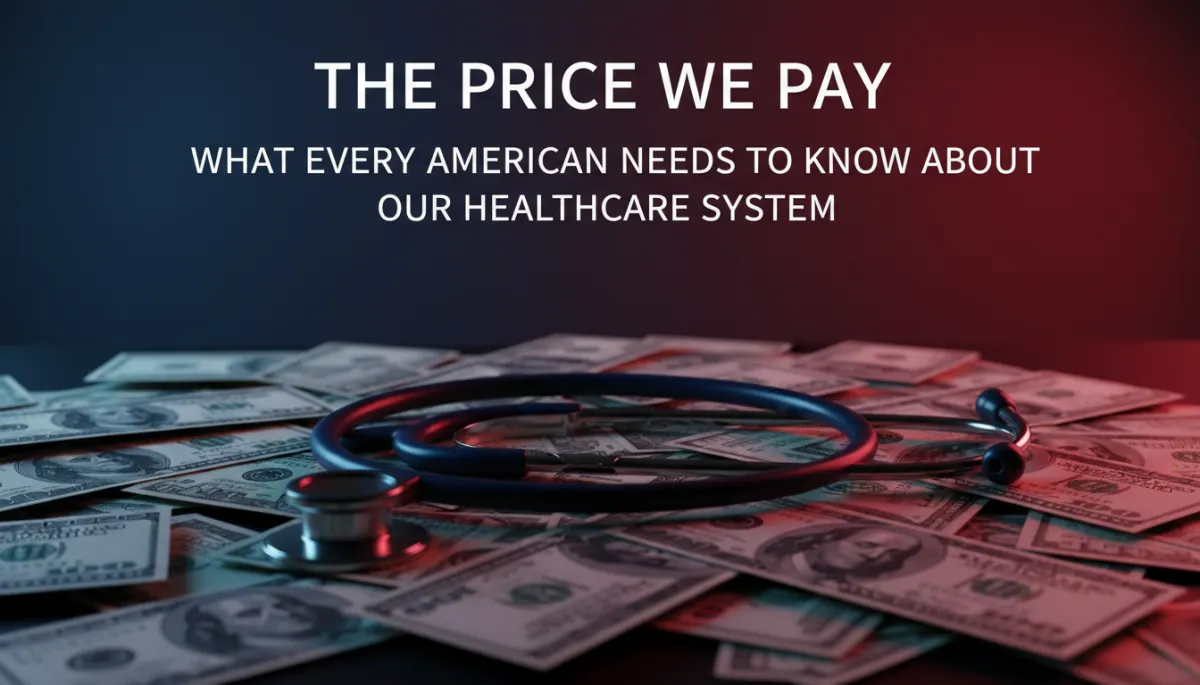
The Price We Pay: What Every American Needs to Know About Our Healthcare System
If you have ever opened a medical bill and felt your stomach drop, you are not alone. In his book The Price We Pay, surgeon and researcher Dr. Marty Makary pulls back the curtain on why healthcare costs feel so out of control and what regular people can actually do about it. Think of this as a plainspoken guide to the big ideas in that book, filtered through the eyes of someone who spends a lot of time helping families make sense of their health coverage.

The secret price list behind your bill
One of the most eye opening ideas in The Price We Pay is something called the chargemaster. It sounds like a character from a video game, but it is really a secret list of sticker prices that hospitals keep for every service, test, and supply. These prices are not based on what it actually costs to provide care. They are often ten to forty times higher. A simple blood test that costs a few dollars to run might be listed for hundreds. A routine procedure might be priced like a luxury car. Almost no one actually pays these full chargemaster prices, yet they are the starting point for what ends up in your mailbox.
Here is the part that really frustrates people. Two hospitals in the same city can charge completely different amounts for the exact same procedure. One might bill twenty thousand dollars for a surgery while another bills eighty thousand. Nothing about the patient changed. The only thing that changed was the sign on the building and the hidden price list inside it. This is why your bills can feel random and unfair. In many ways, they are.
You are allowed to ask, question, and negotiate
Most Americans have no idea they can push back on a medical bill. We are trained to think of it as final, like a speeding ticket that already went through the court system. Dr. Makary shows story after story of people who simply called the hospital, asked for an itemized bill, and then calmly questioned the charges. In many cases, the hospital reduced the amount or wrote off a large part of the debt. Some have financial assistance policies that never get mentioned unless you ask directly. Others will quietly discount a bill for a cash payment or for hardship situations. None of this feels obvious when you are staring at a five figure balance, but it matters. The message is simple. You are allowed to ask. You are allowed to negotiate. You are not being difficult. You are being responsible.
The middlemen you never see on your bill
Another quiet driver of high costs is a group of companies most people never think about. Pharmacy Benefit Managers, or PBMs, sit between drug makers, pharmacies, insurers, and employers. On paper, they are supposed to negotiate better prices and manage pharmacy benefits. In reality, as Makary explains, their contracts are often secret and packed with rebates, spread pricing, and fees that no patient ever sees. The result is that the price you pay at the pharmacy counter may have very little to do with the true cost of the medication. Other types of middlemen work in similar ways around imaging, lab tests, and specialty care. They take a slice of the pie without adding much value for the person who is actually sick.

Surprise bills that feel like a trap
Then there is surprise billing and balance billing. You do what you are supposed to do. You pick an in network hospital. You check that your surgeon is in network. You have the procedure and start to heal. Then a month later, a separate envelope arrives from an anesthesiologist group or a radiology practice you never chose. They were out of network, so they bill you the difference between what your plan paid and what they decided to charge. That difference can be thousands of dollars. It feels like being ambushed after you already crossed the finish line. New federal rules have started to crack down on some of the worst forms of surprise billing, but loopholes remain and people still get caught in the middle.
When one system owns the whole town
Makary also warns about hospital consolidation. In many communities, one large health system has quietly bought up the local hospitals, clinics, and even physician practices. On the surface, it can look efficient. One logo on every building. One big network. Behind the scenes, though, less competition often means higher prices and fewer choices. When there is only one game in town, patients and employers lose leverage. You cannot walk down the street to a competitor if there is no competitor left. That shows up in your premiums and in your out of pocket costs.
Price transparency is improving, but still a maze
The good news is that things are starting to change. New federal rules require hospitals and health plans to post pricing information online. In theory, that should mean you can compare the cost of a knee MRI the same way you compare the price of a plane ticket. In practice, many hospitals still bury their prices in confusing spreadsheets or clunky tools that are almost impossible to use. Makary argues that real transparency means clear, honest, usable information that a normal person can understand before they schedule care, not after. We are not there yet, but the push in that direction is real.
Smarter ways to get care and design coverage
One of the most hopeful parts of The Price We Pay is the section on solutions that are already working. Direct Primary Care practices, for example, charge a simple monthly fee for unlimited primary care. No billing games. No surprise charges. Patients can text their doctor, come in when they need to, and catch problems early before they turn into emergencies. Reference based pricing is another tool that some employers use. Instead of accepting whatever a hospital charges, they peg payments to a fair reference amount, often based on Medicare rates, and negotiate from there. Smarter health plan design can also steer people to high value providers, bundle services at predictable prices, and protect families from the worst financial shocks.
Medical debt and why the right plan matters
It is not an exaggeration to say that medical debt is breaking people. Makary highlights research showing that medical bills are a leading cause of personal bankruptcy in America. Families who are doing everything right, working hard, paying their premiums, still find themselves wiped out by a hospital stay or a cancer diagnosis. That is why the details of your health coverage matter so much. A good plan is not just about having a card in your wallet. It is about having real protection from ruinous bills, clear information about what things will cost, and support when something goes wrong.
An informed public and a trusted guide
At the heart of The Price We Pay is a simple belief. If patients, families, employers, and policymakers understand how the game is played, they can change it from the inside out. A better informed public, combined with smart laws and real price transparency, can reward fair players and squeeze out the worst abuses. That change will not come from Washington alone. It will come from everyday people asking what something costs before they agree to it, comparing options, and choosing plans that put their interests first.
That is also where the right health insurance partner makes a huge difference. You deserve someone who helps you understand likely costs before you schedule a surgery, not just explains the damage after the bill arrives. Someone who will walk through networks, deductibles, and caps in plain language and help you avoid the traps that Makary describes. For families in Oklahoma and across the country, that kind of guidance can be the difference between a stressful year and a manageable one.
If this conversation about healthcare costs has you thinking it might be time to take a fresh look at your coverage, you do not have to sort it out alone. Modern Healthcare Plans of America works with individuals, working families, self employed folks, and small business owners in all fifty states to find health plans that actually fit their lives and budgets. You can talk with someone who lives in this world every day, ask the questions that have been nagging you, and leave with a clearer picture of your options. Reach out by calling 405-500-2510, visiting modernhealthcareplans.com/get-a-quote, or stopping by 4005 NW Expressway, Suite 620E, Oklahoma City, OK 73116. A few honest conversations today can help you avoid paying a painful price tomorrow.